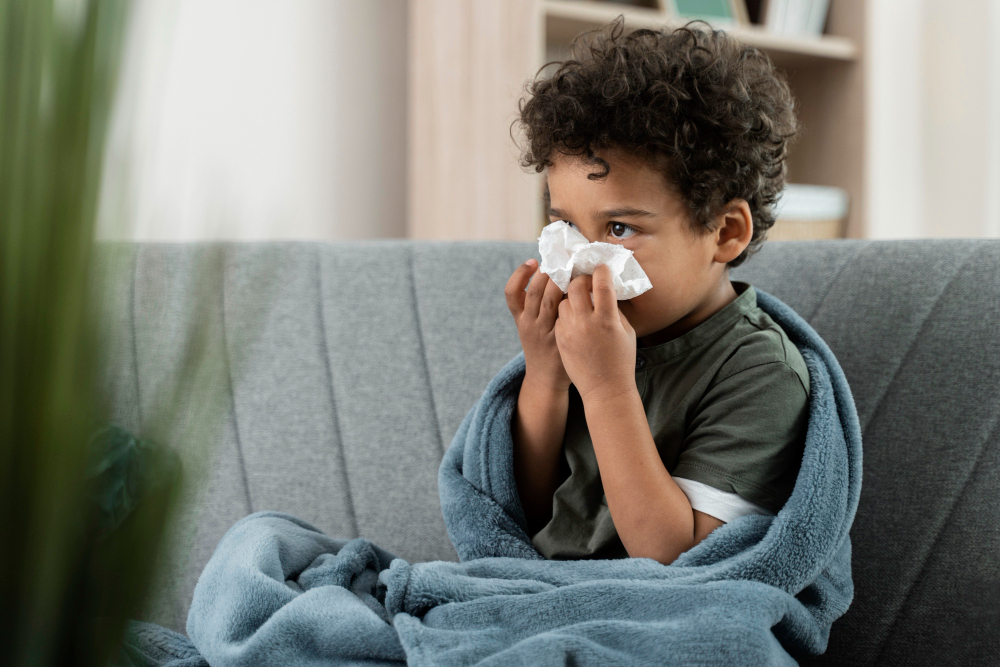
During the rainy season, allergies rising in monsoon often affect children. Many parents notice a child’s runny nose and wonder if it is just a cold. However, monsoon allergies in children are common and can lead to more serious problems if ignored. Therefore, it is important to know the causes, symptoms, and ways to protect your child. In this blog, you will learn why your child’s runny nose during the monsoon needs attention and how to manage it effectively.
What Causes Allergies in Children During Monsoon?
Monsoon brings rain, but it also increases humidity. As a result, mold and dust mites grow quickly inside homes. These are common triggers for monsoon allergies in children. In addition, pollen from plants and outdoor fungi can also cause problems. Sometimes, stagnant water leads to the growth of bacteria and insects, which may worsen allergies.
Therefore, children who are sensitive to these triggers may develop allergy symptoms more often during the rainy season.
Common Symptoms: How to Recognize a Problem
It is important to spot allergy symptoms early. While a child’s runny nose is common, other signs may also appear. For example, your child may sneeze often or have itchy eyes. In some cases, children may cough or feel tired. According to the CDC, these symptoms can last for weeks if not treated.
However, if your child has trouble breathing or develops a fever, seek medical help right away.
Why a Runny Nose Needs Attention
Many parents think a runny nose is harmless. However, ignoring it can lead to bigger problems. For instance, untreated allergies may cause sinus infections or ear problems. In addition, children may have trouble sleeping or concentrating at school. Therefore, it is important to address a child’s runny nose early, especially during the monsoon.
According to pediatric allergy care experts, early treatment can prevent complications and help your child feel better faster.
Diagnosis: When to See a Doctor
Sometimes, home care is not enough. If your child’s runny nose lasts more than 10 days, it is time to see a doctor. In addition, if your child has trouble breathing, wheezing, or a high fever, seek help right away. A doctor may suggest allergy tests or recommend safe medicines for children.
Therefore, early diagnosis helps prevent serious health issues and ensures proper pediatric allergy care.
Effective Treatments and Home Care Tips
There are many ways to manage monsoon allergies in children. First, keep your home clean and dry. In addition, use a dehumidifier if possible. Doctors may suggest safe allergy medicines for children. However, always follow your doctor’s advice before giving any medicine.
Therefore, these simple steps can help reduce allergy symptoms and keep your child comfortable.
Prevention: How to Protect Your Child During Monsoon
Preventing monsoon allergies in children is possible with a few easy steps. For example, keep your child indoors during heavy rain or when pollen counts are high. In addition, make sure your home stays dry and well-ventilated. Teach your child not to touch their face with dirty hands. Regular cleaning and good hygiene can make a big difference.
Therefore, taking these steps can help prevent allergies and keep your child healthy during the rainy season.
In summary, allergies rising in monsoon can cause a child’s runny nose and other problems. Early attention and care are key. Consult a pediatrician for personalized advice if your child has persistent allergy symptoms.